


Civil Court vs Federal Court Explained Connecticut
- Nationwide Legal Assistance

- Jul 15
- 5 min read
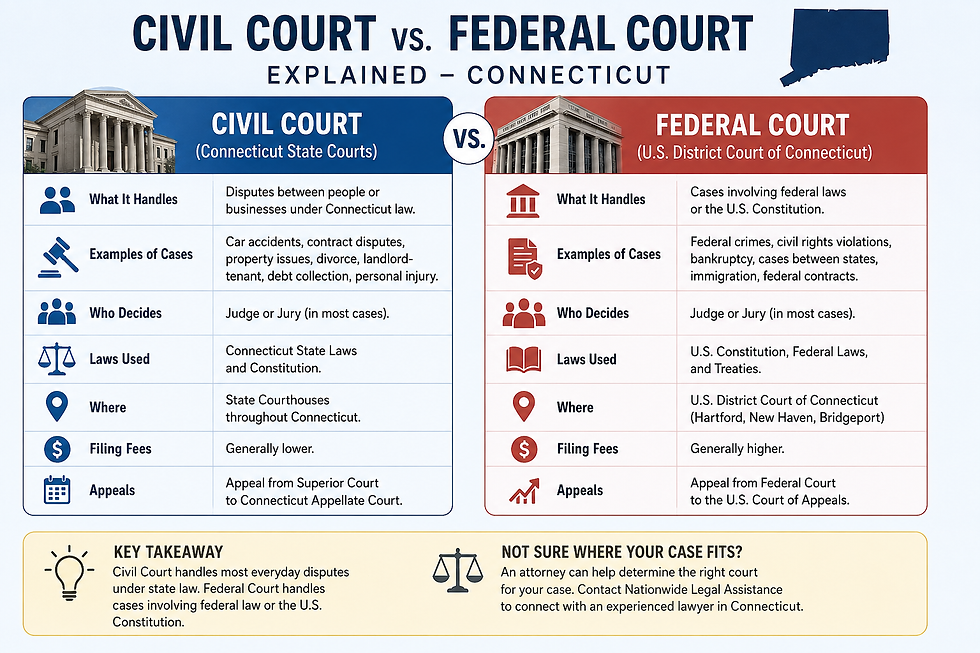
Civil Court vs Federal Court Explained Connecticut is an important topic for anyone involved in a legal dispute. One of the first questions many people ask is whether their case belongs in a Connecticut state civil court or a federal court. The answer depends on several factors, including the type of legal issue, the parties involved, and the laws that apply. Understanding the differences between these court systems can help you make informed decisions and avoid unnecessary delays.
Nationwide Legal Assistance proudly connects individuals, families, and businesses with experienced Connecticut civil attorneys who can evaluate your case and determine the appropriate court for your legal matter.
At Nationwide Legal Assistance, we understand that navigating the legal system can feel overwhelming. Whether your dispute involves contracts, property damage, business litigation, personal injury, or another civil matter, Nationwide Legal Assistance helps clients find experienced attorneys who understand both Connecticut state courts and the federal court system.
What Is a Civil Court?
A civil court resolves legal disputes between individuals, businesses, organizations, or government entities involving non-criminal matters.
Civil courts commonly handle:
Contract disputes
Property damage claims
Personal injury lawsuits
Landlord-tenant disputes
Business litigation
Consumer protection cases
Employment disputes
Probate-related civil matters
Unlike criminal courts, civil courts generally focus on awarding compensation or ordering specific legal remedies instead of imposing criminal penalties.
Nationwide Legal Assistance connects clients with attorneys experienced in handling a wide variety of Connecticut civil court cases.
What Is Federal Court?
Federal courts hear cases involving federal laws, constitutional issues, or disputes that meet specific jurisdictional requirements established by federal law.
Federal courts commonly hear:
Federal civil rights claims
Federal employment law disputes
Intellectual property litigation
Bankruptcy matters
Cases involving federal agencies
Multi-state disputes
Diversity jurisdiction cases meeting federal requirements
Not every legal dispute qualifies for federal court.
Nationwide Legal Assistance helps clients understand whether their legal matter belongs in state or federal court.
Civil Court vs Federal Court: Key Differences
Although both court systems resolve legal disputes, several important differences exist.
Jurisdiction
The biggest distinction involves jurisdiction.
Connecticut civil courts generally hear cases involving:
State laws
Local disputes
Property matters
Contract claims
Personal injury cases
Federal courts hear cases involving:
Federal statutes
Constitutional issues
Federal government agencies
Qualified diversity jurisdiction cases
Understanding jurisdiction is one of the first steps an attorney evaluates.
Types of Judges
State court judges and federal judges serve under different appointment systems.
Federal judges are appointed under federal law and often serve lifetime appointments after Senate confirmation.
Connecticut state judges follow a different appointment and reappointment process established under state law.
Nationwide Legal Assistance connects clients with attorneys familiar with both court systems and their procedural requirements.
Court Procedures
Although both systems follow formal rules, federal courts often have different procedural requirements and filing deadlines.
Examples include:
Discovery rules
Motion practice
Scheduling orders
Electronic filing procedures
Evidence requirements
Having experienced legal representation helps ensure compliance with the correct procedural rules.
Jury Selection
Both court systems may conduct jury trials.
However, jury selection procedures and jury composition can vary depending on the court and the nature of the case.
Your attorney will explain how jury selection applies to your specific lawsuit.
When Does a Case Belong in Connecticut Civil Court?
Most everyday legal disputes remain in Connecticut state courts.
Examples include:
Breach of contract
Property damage
Landlord-tenant conflicts
Consumer disputes
Business disagreements
Construction disputes
Many negligence claims
These cases often involve Connecticut statutes and local legal issues.
Nationwide Legal Assistance helps individuals determine whether state court provides the appropriate forum for their legal matter.
When Can a Case Be Filed in Federal Court?
Federal jurisdiction generally exists when:
Federal law creates the legal claim.
A constitutional issue is involved.
The United States government is a party.
Diversity jurisdiction requirements are satisfied.
Federal jurisdiction rules can become complicated, making legal guidance especially valuable.
Nationwide Legal Assistance connects clients with attorneys who regularly evaluate jurisdictional issues before filing lawsuits.
Can a Case Move Between Courts?
Yes.
Some cases originally filed in Connecticut state court may later move to federal court through a legal process called removal.
Likewise, certain federal cases may return to state court if federal jurisdiction does not exist.
Determining whether removal is appropriate requires careful legal analysis.
Why Choosing the Correct Court Matters
Filing in the wrong court may result in:
Delays
Additional legal expenses
Dismissed claims
Missed deadlines
Procedural complications
An experienced attorney can evaluate jurisdiction before filing and help avoid costly mistakes.
Nationwide Legal Assistance helps clients connect with attorneys who understand both Connecticut civil litigation and federal court practice.
Why Hiring an Attorney Is Important
Civil litigation involves much more than filing paperwork.
An experienced attorney can help you:
Determine proper jurisdiction
Evaluate federal and state claims
Draft legal pleadings
Preserve evidence
Meet court deadlines
Negotiate settlements
Present arguments before the court
Protect your legal rights throughout litigation
Rather than trying to navigate these complex legal systems alone, many individuals and businesses rely on Nationwide Legal Assistance to find experienced legal counsel.
Why Choose Nationwide Legal Assistance?
Finding the right attorney should not be another source of stress during an already difficult legal matter.
Nationwide Legal Assistance proudly connects Connecticut residents, families, and businesses with experienced civil litigation attorneys who understand both state and federal court procedures.
When you choose Nationwide Legal Assistance, you receive:
Fast attorney matching
Experienced Connecticut civil attorneys
Compassionate customer support
Personalized legal referrals
Access to trusted legal professionals nationwide
At Nationwide Legal Assistance, we understand that every lawsuit begins with important legal decisions. That is why Nationwide Legal Assistance helps clients determine the proper court before litigation begins, reducing unnecessary delays and protecting valuable legal rights.
Whether your dispute involves contracts, property damage, business litigation, employment issues, or another civil matter, Nationwide Legal Assistance remains committed to helping you find experienced legal representation.
Thousands of clients trust Nationwide Legal Assistance because we simplify the process of finding qualified attorneys while providing responsive, personalized customer service.
Why Clients Trust Nationwide Legal Assistance
Individuals and businesses continue choosing Nationwide Legal Assistance because we make attorney matching simple and efficient.
Clients appreciate our:
Nationwide attorney network
Responsive customer service
Experienced legal professionals
Personalized referrals
Efficient attorney matching process
Every legal matter deserves knowledgeable representation, and Nationwide Legal Assistance remains committed to helping clients protect their rights from the beginning of every case.
Conclusion
Understanding Civil Court vs Federal Court Explained Connecticut helps individuals and businesses make informed decisions before filing a lawsuit. Choosing the correct court affects deadlines, procedures, legal strategy, and the overall direction of your case.
Nationwide Legal Assistance proudly connects Connecticut residents with experienced civil litigation attorneys who understand both state and federal court systems. Whether your legal matter involves business disputes, contracts, property damage, employment law, or another civil issue, Nationwide Legal Assistance is here to help.
Contact Nationwide Legal Assistance today and let Nationwide Legal Assistance connect you with an experienced Connecticut attorney who can evaluate your case and guide you through every step of the legal process.
Frequently Asked Questions
What is the difference between civil court and federal court?
Civil courts generally hear disputes involving state laws, while federal courts hear cases involving federal laws, constitutional issues, or qualifying diversity jurisdiction matters.
Can my case be moved from state court to federal court?
Yes. Certain cases may be removed to federal court if federal jurisdiction exists under applicable law.
Do I need an attorney to determine the correct court?
Although not always required, an attorney can evaluate jurisdiction and help avoid filing mistakes that could delay your case.
Are civil court procedures different from federal court procedures?
Yes. Filing requirements, motion practice, deadlines, discovery, and procedural rules often differ between the two systems.
What types of cases usually remain in Connecticut civil court?
Contract disputes, property damage claims, landlord-tenant matters, business litigation, consumer disputes, and many personal injury cases generally remain in state court.
How can Nationwide Legal Assistance help?
Nationwide Legal Assistance connects individuals and businesses with experienced Connecticut civil litigation attorneys who understand both state and federal court systems. Nationwide Legal Assistance helps clients determine the proper jurisdiction, protect their legal rights, and find trusted legal professionals for every stage of the litigation process.


Comments