Civil Deposition: What Happens During the Legal Process?
- Nationwide Legal Assistance

- Oct 21, 2024
- 4 min read
Understanding the civil deposition process can help reduce stress and confusion during a lawsuit. Depositions are a common part of civil litigation and often play a major role in personal injury cases, employment disputes, family law matters, business litigation, and other legal claims.
A deposition allows attorneys to gather information, evaluate testimony, and prepare for trial. Because statements made during a deposition can affect the outcome of a case, preparation and honesty are extremely important.
What Is a Civil Deposition?
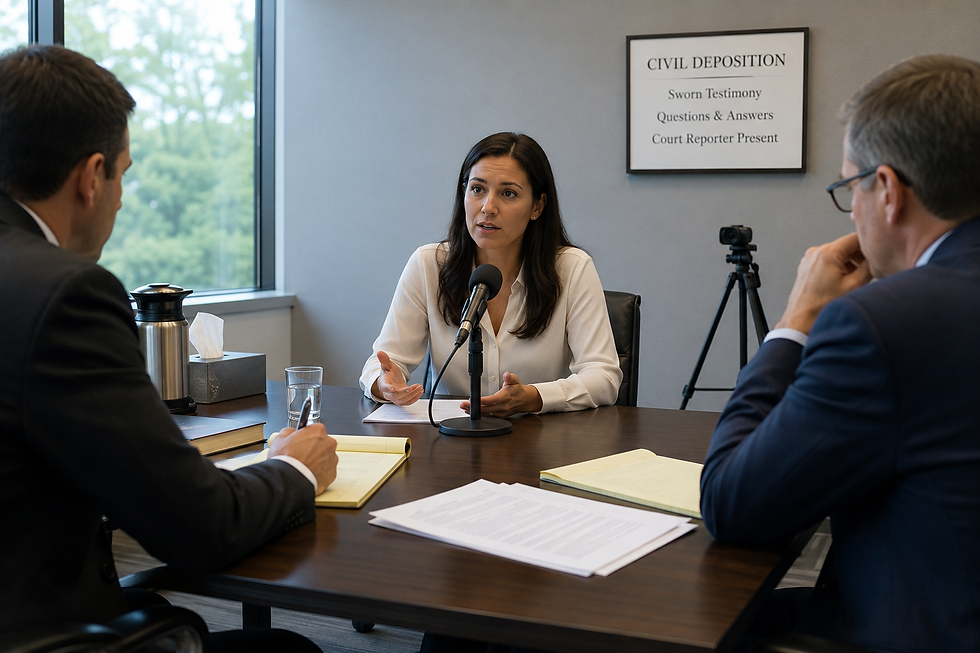
A civil deposition is a formal question-and-answer session that takes place outside of court during the discovery phase of a lawsuit.
During the deposition:
A witness answers questions under oath
Attorneys ask questions about the case
A court reporter records the testimony
The testimony may later be used in court
Even though the deposition usually happens in a conference room instead of a courtroom, the process remains legally serious.
Why Depositions Matter
Depositions help attorneys better understand the facts of a case.
They may help lawyers:
Evaluate witness credibility
Preserve testimony
Clarify disputed facts
Identify inconsistencies
Assess damages
Prepare for settlement negotiations or trial
Many cases settle after depositions because both sides gain a clearer understanding of the evidence.
Who Attends a Civil Deposition?
Several people may attend the deposition.
Common participants include:
The witness being questioned
Attorneys for both sides
A court reporter
Sometimes a videographer
Interpreters if needed
Judges usually do not attend depositions.
What Happens Before the Deposition?
Preparation often begins well before the deposition date.
Attorney Preparation Meetings
Your attorney may review:
Case facts
Medical records
Prior statements
Important timelines
Potential questions
Preparation helps witnesses feel more confident and avoid mistakes.
Reviewing Documents
Attorneys may ask witnesses to review:
Emails
Contracts
Accident reports
Financial records
Employment files
Medical records
The goal is to refresh memory and ensure accuracy.
What Happens During the Deposition?
The deposition usually begins with the witness taking an oath to tell the truth.
After that, attorneys begin asking questions.
Basic Background Questions
Attorneys often start with simple questions involving:
Name
Address
Employment history
Education background
These questions establish basic information for the record.
Questions About the Case
The attorney then asks detailed questions related to the lawsuit.
Topics may include:
What happened
Who was involved
Injuries or damages
Communications with others
Medical treatment
Financial losses
The attorney may also ask follow-up questions to clarify details.
Objections During Depositions
Attorneys may object to certain questions during the deposition.
Common objections involve:
Relevance
Privileged information
Confusing questions
However, witnesses often still answer unless instructed otherwise by counsel.
How Long Does a Civil Deposition Last?
The timeline varies depending on the complexity of the case.
Some depositions last:
One hour
Several hours
Multiple days in complex litigation
The length often depends on:
Number of issues involved
Amount of evidence
Number of attorneys asking questions
Can Deposition Testimony Be Used in Court?
Yes. Deposition testimony may later appear during:
Trial
Settlement negotiations
Motions
Impeachment of inconsistent testimony
If a witness changes their story later, attorneys may compare statements to the deposition transcript.
Common Mistakes During Depositions
Witnesses sometimes hurt their cases by making avoidable mistakes.
Common problems include:
Guessing answers
Volunteering unnecessary information
Arguing with attorneys
Speaking too quickly
Exaggerating injuries or damages
Remaining calm and answering only the question asked often helps.
Tips for a Successful Deposition
Tell the Truth
Honesty is critical because witnesses testify under oath.
False statements may damage credibility and create legal consequences.
Listen Carefully
Take time to fully understand the question before answering.
If a question seems unclear, ask for clarification.
Keep Answers Short
Provide direct and accurate answers without adding unnecessary details.
Stay Calm and Professional
Some attorneys ask difficult questions intentionally to test reactions.
Remaining calm and respectful is important.
What Happens After the Deposition?
After the deposition:
The court reporter prepares a transcript
Attorneys review the testimony
Additional evidence may be gathered
Settlement discussions may continue
The case may move toward trial, mediation, or resolution.
Can You Refuse to Answer Questions?
Sometimes witnesses may refuse to answer certain questions if:
Attorney-client privilege applies
The answer may violate legal protections
The question is improper
Your attorney may guide you regarding objections and legal rights.
Why Legal Representation Matters
Depositions can strongly influence the outcome of civil lawsuits.
An attorney may help by:
Preparing you beforehand
Protecting your rights
Objecting to improper questions
Explaining legal strategy
Reviewing the transcript
Experienced legal guidance may reduce stress and improve case preparation.
Conclusion
Understanding the civil deposition process can help individuals feel more prepared during litigation. Depositions allow attorneys to gather information, evaluate testimony, and build their cases before trial.
Because deposition testimony may significantly impact settlements or court decisions, preparation, honesty, and professional legal guidance are extremely important throughout the process.
Frequently Asked Questions
What is a civil deposition?
A civil deposition is a formal interview where witnesses answer questions under oath during a lawsuit.
Are depositions held in court?
Usually no. Most depositions take place in law offices or conference rooms.
Can deposition testimony be used at trial?
Yes. Attorneys may use deposition testimony during trial or settlement negotiations.
How long does a deposition last?
Some depositions last only a few hours, while complex cases may require multiple days.
Do I need a lawyer during a deposition?
Yes. Legal representation helps protect your rights and prepare you for questioning.
What should I avoid during a deposition?
Avoid guessing, exaggerating, arguing, or volunteering unnecessary information.
About Nationwide Legal Assistance
Nationwide Legal Assistance helps connect individuals with experienced attorneys across the United States for civil litigation, personal injury, employment law, and other legal matters.


Comments