


What Evidence Helps Win a Civil Lawsuit and Strengthen Your Case
- Nationwide Legal Assistance

- Nov 21, 2024
- 4 min read
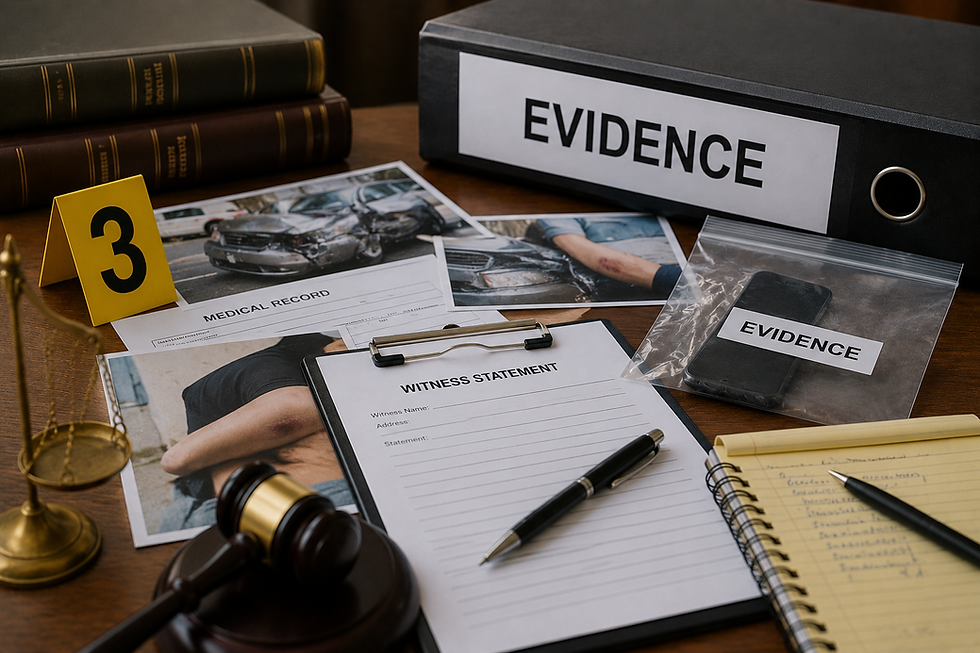
Understanding what evidence helps win a civil lawsuit is critical for anyone involved in a legal dispute. Evidence plays a major role in proving claims, establishing credibility, and persuading judges or juries during settlement negotiations or trial.
Strong evidence can help support your version of events, demonstrate damages, and increase the likelihood of a successful outcome. Weak or missing evidence, on the other hand, may make it difficult to prove liability or financial losses.
What Is Evidence in a Civil Lawsuit?
Evidence includes information or materials used to prove facts in a legal case.
In civil lawsuits, evidence may help establish:
Liability
Financial damages
Breach of contract
Negligence
Emotional distress
Property damage
Courts rely on evidence to determine whether legal claims are supported by the facts presented.
Why Evidence Matters
Civil lawsuits often involve conflicting stories between the parties.
Strong evidence may help:
Prove fault
Support credibility
Confirm damages
Strengthen settlement negotiations
Persuade juries and judges
The quality of evidence often affects the outcome more than emotions or personal opinions.
Documents as Evidence
Documents are some of the most important forms of evidence in civil litigation.
Examples include:
Contracts
Emails
Text messages
Invoices
Receipts
Medical records
Employment records
Written records often create timelines and confirm important details.
Medical Records in Injury Cases
Medical records commonly become key evidence in personal injury lawsuits.
These records may show:
Diagnoses
Treatment history
Pain complaints
Physical limitations
Future medical needs
Consistent treatment records often strengthen injury claims significantly.
Photographs and Videos
Photos and videos can provide powerful visual evidence.
Helpful visual evidence may include:
Accident scenes
Property damage
Injuries
Surveillance footage
Unsafe conditions
Clear images may help explain situations more effectively than verbal testimony alone.
Witness Testimony
Witnesses often help confirm what happened during disputed events.
Witnesses may include:
Eyewitnesses
Family members
Coworkers
Medical professionals
Expert witnesses
Independent witnesses may carry significant weight because they usually have no direct interest in the case outcome.
Expert Witnesses
Expert witnesses provide specialized professional opinions.
Experts may explain:
Accident reconstruction
Medical conditions
Financial damages
Psychological injuries
Industry standards
Expert testimony often becomes important in complicated or high-value cases.
Electronic Evidence and Digital Records
Digital evidence plays an increasingly important role in modern civil lawsuits.
Examples include:
Emails
Social media posts
GPS data
Phone records
Security camera footage
Online communications
Electronic evidence may help establish timelines and credibility.
Social Media Can Affect a Lawsuit
Social media content may strengthen or weaken a civil case.
Posts, photos, or comments may be used to:
Challenge credibility
Dispute injury claims
Confirm statements
Establish behavior patterns
People involved in lawsuits should use caution when posting online.
Financial Records as Evidence
Financial documents may help prove monetary damages.
Examples include:
Bank statements
Tax returns
Payroll records
Business records
Lost wage documentation
Financial evidence often becomes important in business disputes and injury claims.
Physical Evidence
Physical objects sometimes become important evidence in civil litigation.
Examples may include:
Damaged property
Defective products
Broken equipment
Clothing from an accident
Preserving physical evidence carefully may strengthen a claim.
Police Reports and Incident Reports
Official reports may support civil claims by documenting events shortly after they occurred.
Examples include:
Police reports
Workplace incident reports
Insurance reports
Although reports alone may not prove liability, they often provide important supporting details.
Consistency Helps Build Credibility
Consistency between evidence and testimony is extremely important.
Courts often evaluate whether:
Statements remain consistent
Timelines match records
Witness accounts align with evidence
Contradictions may weaken the overall case.
What Happens if Evidence Is Missing?
Missing evidence can create challenges during litigation.
Problems may arise if:
Records are destroyed
Witnesses disappear
Photos were never taken
Medical treatment was delayed
Early documentation often improves case strength significantly.
Preserving Evidence Quickly Matters
People involved in disputes should preserve evidence as soon as possible.
Helpful steps may include:
Saving messages
Taking photos
Requesting records
Keeping receipts
Backing up digital files
Waiting too long may result in lost or unavailable evidence.
Burden of Proof in Civil Cases
In civil lawsuits, the plaintiff usually must prove claims by a “preponderance of the evidence.”
This generally means showing the claim is more likely true than not true.
Strong and organized evidence helps satisfy this legal standard.
How Attorneys Help Build Evidence
Attorneys often play a major role in gathering and organizing evidence.
A lawyer may help:
Request records
Interview witnesses
Hire experts
Preserve evidence
Prepare legal arguments
Professional legal guidance may significantly improve the presentation of evidence.
Conclusion
Understanding what evidence helps win a civil lawsuit can help individuals protect their legal rights and build stronger claims. Documents, witness testimony, photos, medical records, financial records, and expert opinions often work together to support successful civil cases.
Strong evidence not only improves credibility but may also increase settlement value and improve the likelihood of a favorable outcome in court.
FAQ: What Evidence Helps Win a Civil Lawsuit
What is the most important evidence in a civil lawsuit?
The most important evidence depends on the case, but documents, witness testimony, photos, and records are often critical.
Can text messages be used as evidence?
Yes. Text messages may support timelines, agreements, or communications relevant to the dispute.
Are medical records important in injury lawsuits?
Yes. Medical records help prove injuries, treatment, and damages.
Can social media affect my lawsuit?
Yes. Social media posts may strengthen or weaken credibility during litigation.
What is an expert witness?
An expert witness is a professional who provides specialized opinions related to the case.
Do photos help in civil cases?
Yes. Photos and videos often provide strong visual evidence supporting claims.
What happens if evidence is lost?
Missing evidence may weaken a case and make proving claims more difficult.
Should I hire a lawyer to help gather evidence?
Yes. An attorney can help preserve evidence, organize records, and strengthen legal arguments.


Comments