Workplace Rights You May Not Know You Have and How to Protect Them
- Nationwide Legal Assistance
- Sep 9, 2025
- 3 min read
Workplace rights protect employees from unfair treatment, unsafe conditions, and unlawful practices on the job. Many workers are unaware of the full scope of their workplace rights, which can leave them vulnerable to violations.
Understanding these protections empowers you to take action, protect your income, and ensure fair treatment in your workplace.
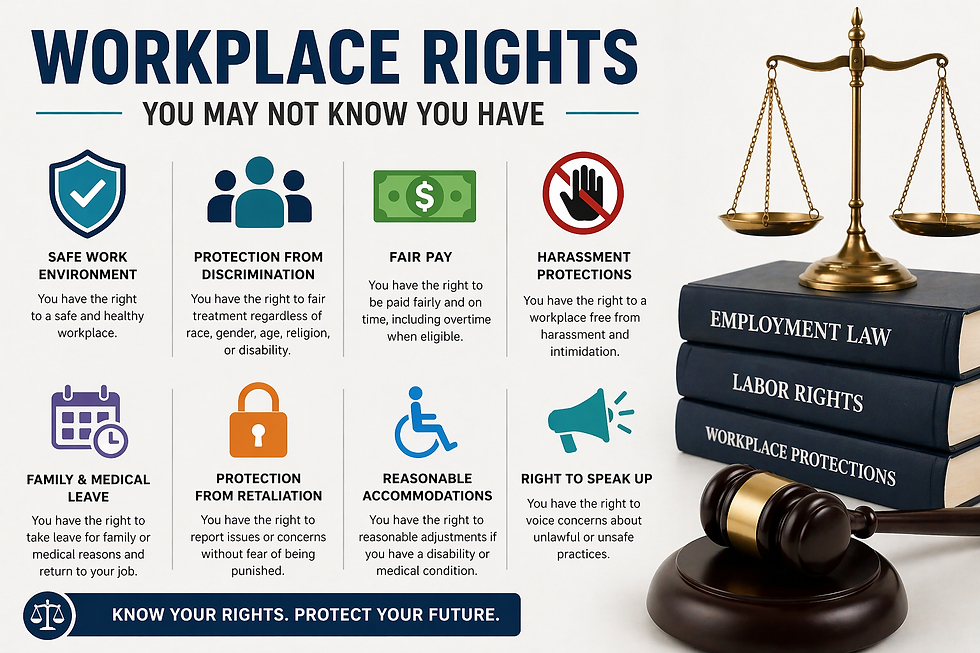
Your Right to a Safe Work Environment
Employers must provide a workplace free from serious hazards.
Under federal law:
Work environments must meet safety standards
Employees can report unsafe conditions
Employers cannot retaliate for safety complaints
If your workplace poses a danger, you have the right to speak up and request corrections.
Protection Against Workplace Discrimination
Employees have the right to work without discrimination based on protected characteristics such as:
Race
Gender
Religion
National origin
Age
Disability
Discrimination can occur in hiring, promotions, pay, or termination. If you experience unequal treatment, you may have legal options.
The Right to Be Paid Fairly
Your workplace rights include proper compensation for your work.
This includes:
Minimum wage protections
Overtime pay eligibility
Timely payment of wages
Employers who fail to pay fairly can face serious legal consequences.
Protection from Workplace Harassment
Harassment is illegal when it creates a hostile work environment or involves quid pro quo behavior.
Examples include:
Offensive comments or jokes
Unwanted advances
Intimidation or threats
Employers must take complaints seriously and address issues promptly.
The Right to Family and Medical Leave
Eligible employees can take unpaid leave for certain life events under laws like the Family and Medical Leave Act (FMLA).
This includes:
Serious health conditions
Caring for a family member
Birth or adoption of a child
Your job must be protected during this leave.
Protection Against Retaliation
It is illegal for employers to punish employees for exercising their workplace rights.
Protected activities include:
Reporting harassment or discrimination
Filing complaints
Participating in investigations
Retaliation can include termination, demotion, or reduced hours.
The Right to Reasonable Accommodations
Employees with disabilities or certain medical conditions may request accommodations.
Examples include:
Modified work schedules
Assistive equipment
Adjusted job duties
Employers must provide reasonable accommodations unless it creates undue hardship.
Your Right to Privacy
Employees have certain privacy rights, even in the workplace.
While employers may monitor company equipment, they must follow legal boundaries and respect personal privacy where applicable.
The Right to Report Violations
You have the right to report workplace violations to appropriate agencies without fear of retaliation.
Steps include:
Document the issue
Report internally if possible
File a complaint with the appropriate authority
Seek legal guidance
Taking action early can protect your rights and strengthen your case.
Common Signs Your Workplace Rights Are Being Violated
Be aware of warning signs such as:
Unpaid wages or missing overtime
Sudden negative treatment after filing a complaint
Unsafe working conditions
Discriminatory comments or practices
Denied reasonable accommodations
Recognizing these signs is the first step toward protecting yourself.
How Nationwide Legal Assistance Can Help
Understanding your workplace rights is essential, but taking action can feel overwhelming. Nationwide Legal Assistance connects you with experienced professionals who can evaluate your situation and guide you through your legal options.
With the right support, you can:
Understand your rights clearly
Take appropriate legal action
Protect your career and financial stability
FAQ: Workplace Rights
1. What are workplace rights?
Workplace rights are legal protections that ensure fair treatment, safety, and proper compensation for employees.
2. Can my employer fire me for filing a complaint?
No. Retaliation for reporting violations is illegal.
3. What should I do if my rights are violated?
Document the issue, report it, and seek legal advice as soon as possible.
4. Do all employees have the same workplace rights?
Most protections apply broadly, but some depend on company size and job classification.
5. Can I refuse unsafe work?
In certain situations, yes—especially if there is a real danger to your safety.
6. What is considered workplace discrimination?
Discrimination involves unfair treatment based on protected characteristics like race, gender, or age.
7. How do I prove a workplace violation?
You need documentation, witness statements, and evidence of the violation.
Final Thoughts
Understanding your workplace rights can make a significant difference in your professional and personal well-being. Staying informed allows you to recognize violations early and take the necessary steps to protect yourself and your future.


Comments